
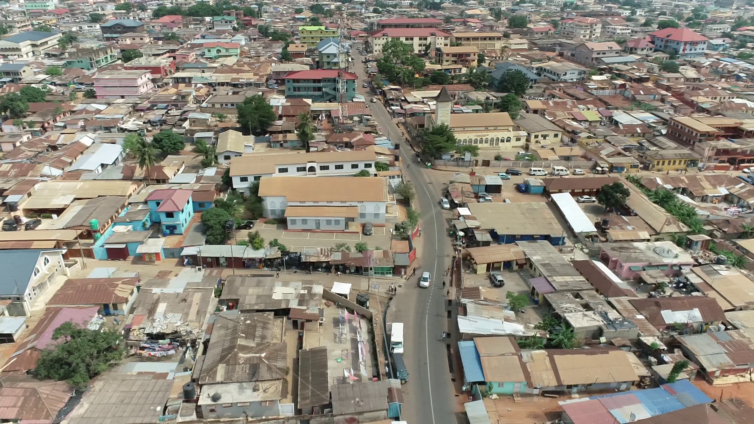
Migrants living in Ghana’s cities often delay or avoid home ownership not because they are stuck, but because they are deliberately investing in houses and family obligations back home, a new study of translocal migrants in Kumasi has found.
A new study published in Africa Spectrum has revealed that many migrants in Ghana’s cities follow a “dual housing strategy”, maintaining modest accommodation in urban areas while channelling most of their resources into building houses and supporting families in their home villages.
The research, conducted among translocal migrants in Kumasi, shows that urban housing decisions are shaped as much by obligations to home communities as by conditions in the city’s housing market.
Led by researchers including Dr. Daniel Kwame Blija and colleagues at the Department of Planning, KNUST, the study draws on in-depth interviews with 71 migrants and engagement with migrant associations.
It found that about 77% of respondents lived in compound houses or shared rentals, not as a sign of failure to “move up” the housing ladder, but as a strategic choice.
“For many migrants, the city is a base, not a final destination,” the authors note. Frequent travel back home often for ceremonies, farming or childbirth and regular remittances reduce the incentive and capacity to invest heavily in permanent urban housing.
The study found that nearly 75% of migrants had returned home multiple times within a year, while most sent regular remittances averaging about GH₵350, covering food, farm inputs and clothing for relatives. These financial commitments, the researchers say, significantly limit savings for housing in Kumasi.
Instead, migrants rely heavily on ethnic and social networks to access housing. Relatives, friends and hometown associations often provide temporary accommodation, negotiate with landlords, or share housing information through platforms such as WhatsApp. These networks were widely seen as more trustworthy and flexible than formal housing channels.
Housing pathways differed by occupation. Students and apprentices typically began by staying with relatives or in shared accommodation before renting independently years later. Informal workers often transitioned slowly from family housing to single rooms, while formal sector workers tended to move more quickly into individual rentals, with clearer prospects for eventual home ownership.
Crucially, the study challenges conventional ideas of housing “progress.” Many migrants intentionally prioritise investing in homes in their villages seen as symbols of status, security and belonging over acquiring property in the city.
The authors describe this pattern as “strategic immobility” or “translocal housing fixity,” arguing that prolonged stays in informal urban housing can be a rational and successful outcome when viewed through the lens of translocal life.
The findings, the researchers say, point to the need for housing policies that recognise migrants’ dual lives, rather than assuming a linear path toward urban home ownership.
“Success for translocal migrants,” the study concludes, “lies in sustaining a foothold in the city while fulfilling social, economic and symbolic obligations back home.”


